christopher
THCa decarboxylation is the chemical process that converts tetrahydrocannabinolic acid (THCa), a non-intoxicating compound found in raw cannabis, into THC, the psychoactive substance responsible for cannabis’s characteristic effects. This conversion happens when heat is applied, typically through smoking, vaping, or cooking, breaking off a carboxyl group from the THCa molecule and transforming it into delta-9-tetrahydrocannabinol.
Understanding this process matters significantly for anyone considering or currently using best THCA vape pens because the health risks associated with vaping THCa products differ substantially from those of consuming raw THCa. While raw THCa remains stable at room temperature and doesn’t produce intoxicating effects, the moment you apply heat through a vaping device, you trigger decarboxylation and create THC vapor along with potential thermal degradation byproducts.
The health concerns surrounding THCa vaping extend beyond simply inhaling THC. Questions about lung safety, chemical contaminants, device quality, and long-term respiratory effects remain only partially answered by current research. Unlike traditional oral cannabis consumption, vaping introduces heated compounds directly into lung tissue, creating unique exposure pathways that researchers continue to study.
This article examines both the science behind THCa decarboxylation and the specific health risks associated with vaping these products. You’ll learn how temperature affects the conversion process, what compounds form during heating, and what current evidence tells us about respiratory safety. The goal is straightforward: provide the information needed to make informed decisions about THCa vaping without judgment or sensationalism.
What THCa Is and Why Decarboxylation Matters
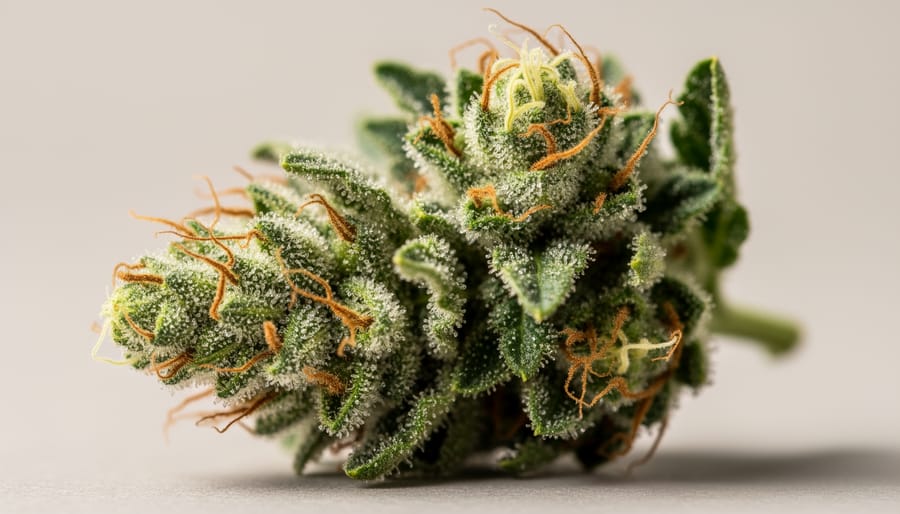
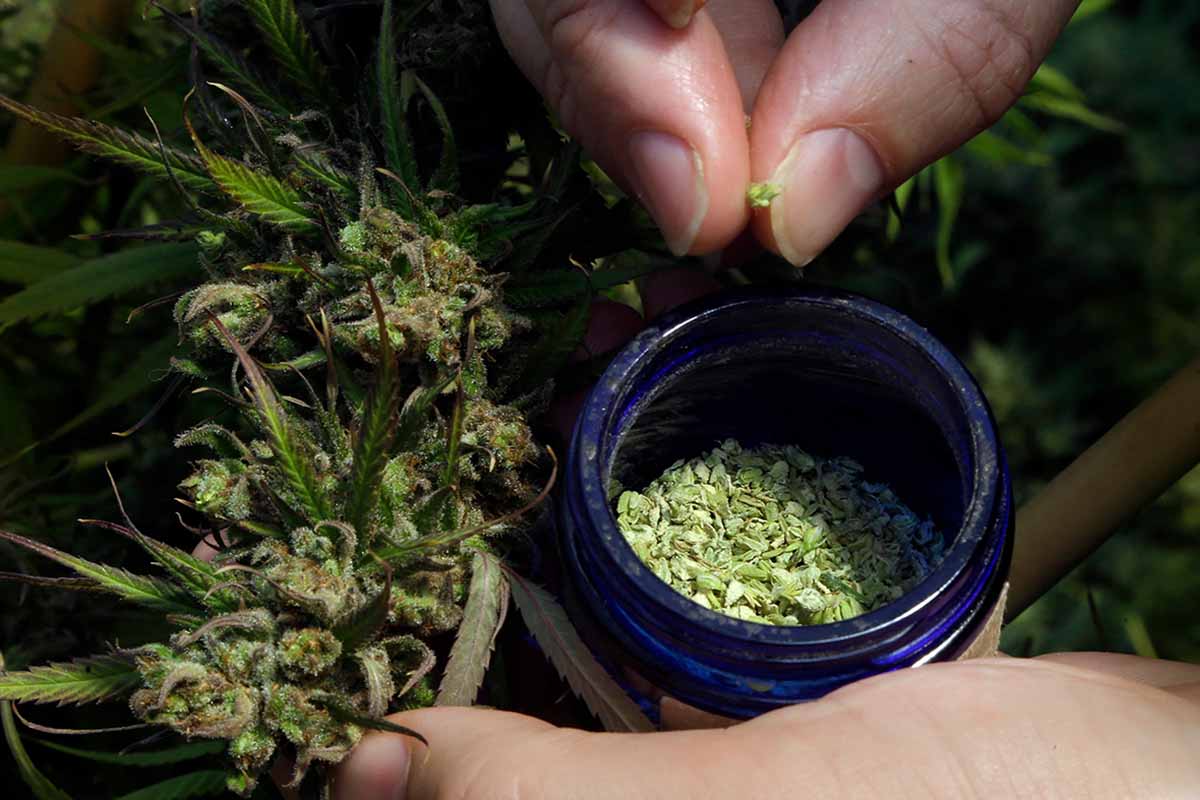
THCa, or tetrahydrocannabinolic acid, is the predominant cannabinoid in raw, unheated cannabis plants. Unlike its better-known cousin THC, THCa doesn’t produce intoxicating effects when consumed. The compound exists in fresh cannabis flowers, leaves, and trichomes, serving as the plant’s natural precursor to THC. Many users encounter THCa without realizing it, particularly when handling or processing raw cannabis materials.
- THCa (Tetrahydrocannabinolic Acid)
- The non-intoxicating acidic form of THC found naturally in raw cannabis plants. It becomes psychoactive only after heat exposure removes its carboxyl group.
- THC (Tetrahydrocannabinol)
- The primary psychoactive compound in cannabis responsible for intoxicating effects. It forms when THCa undergoes decarboxylation.
- Decarboxylation
- A chemical reaction that removes a carboxyl group (COOH) from a molecule through heat application. This process converts THCa into THC.
- Carboxyl Group
- A molecular structure containing carbon, oxygen, and hydrogen (COOH) that makes THCa acidic and non-intoxicating. Its removal through heat triggers the conversion to THC.
- Psychoactive Effects
- Changes in perception, mood, consciousness, or behavior caused by substances that act on the central nervous system. THC produces these effects, while THCa does not.
The transformation from THCa to THC matters critically for vaping because vaporizers apply controlled heat directly to cannabis materials or concentrates. When someone vapes a THCa product, the device’s heating element initiates decarboxylation immediately, converting the dormant compound into its active form within seconds. This rapid conversion explains why vaping produces nearly instant effects compared to consuming raw cannabis, which would deliver primarily THCa with minimal psychoactive impact.
Understanding this process is essential for anyone considering vaping THCa products, as the efficiency and completeness of decarboxylation directly influences both the experience and potential health implications. Different vaping temperatures, device types, and product formulations affect how thoroughly THCa converts to THC, creating variability in outcomes and exposure to byproducts.
How Decarboxylation Works When Vaping
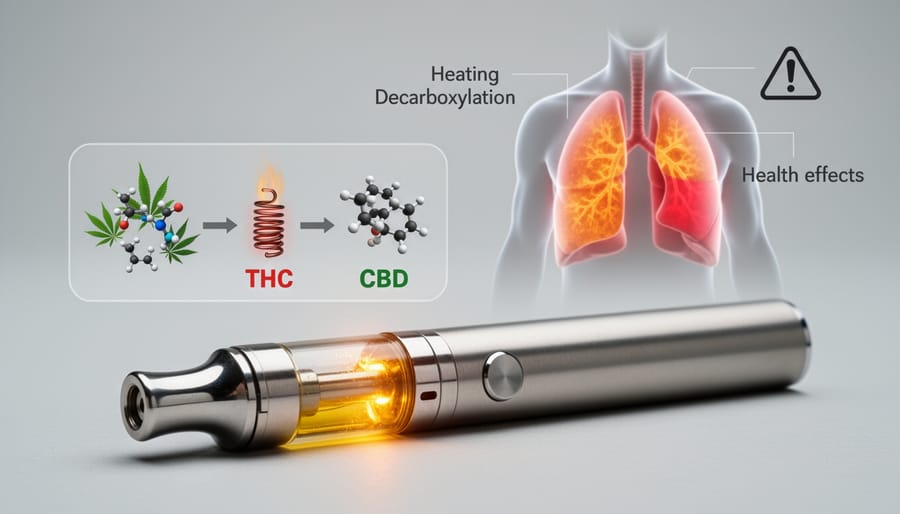
When you heat THCa-containing material in a vaporizer, you initiate a chemical reaction that transforms the molecule’s structure. The heat provides energy that breaks the bond holding the carboxyl group (COOH) to the rest of the THCa molecule. This group then separates as carbon dioxide and water vapor, leaving behind THC, the psychoactive compound responsible for cannabis’s intoxicating effects.
Vaping achieves decarboxylation through controlled heating, typically between 220°F and 250°F (105°C to 121°C). At these temperatures, the conversion begins within seconds as the device heats the material or cannabis oil. The process accelerates as temperature increases, with most decarboxylation completing in under a minute during typical vaping sessions. This speed distinguishes vaping from methods requiring longer exposure to lower temperatures.
The molecular transformation is straightforward. THCa’s chemical formula (C₂₂H₃₀O₄) loses CO₂ to become THC (C₂₁H₃₀O₂). The heating chamber or coil provides consistent warmth that drives this reaction throughout the material, though conversion rates depend on how evenly heat distributes and how long it’s applied.
Vaping temperatures sit in a middle range compared to other heating methods. Smoking cannabis through combustion reaches 1,400°F to 1,650°F (760°C to 900°C), which instantly decarboxylates THCa but also creates combustion byproducts like tar and carbon monoxide. Cooking or baking with cannabis typically uses 220°F to 250°F (105°C to 121°C) for 30 to 45 minutes, achieving thorough decarboxylation through extended low-heat exposure. Vaping matches cooking temperatures but applies them for much shorter periods, relying on direct contact between heat and cannabis material rather than surrounding oven air.
The precision matters because temperatures below 200°F may incompletely convert THCa, while excessive heat above 300°F can degrade THC itself or create unwanted chemical changes. Vaping’s controlled approach aims to optimize conversion while minimizing degradation.
Types of Vaping Devices and Decarboxylation Methods
Temperature-Controlled vs. Fixed-Temperature Devices
Temperature-controlled devices let users set precise heating levels, typically ranging from 320°F to 430°F (160°C to 221°C), which allows fine-tuning of decarboxylation efficiency and vapor composition. This control means you can target the optimal range for converting THCa to THC without overheating, potentially reducing formation of harmful combustion byproducts. Lower temperatures preserve more terpenes and may produce smoother vapor, though decarboxylation takes longer.
Fixed-temperature devices, including many disposable pens operate at a single preset temperature, often between 350°F and 400°F (177°C and 204°C), without user adjustment. While convenient, this lack of control carries trade-offs. If the preset runs too hot, you risk producing irritants like formaldehyde or acrolein. If it runs too cool, incomplete decarboxylation leaves unconverted THCa, reducing intended effects and potentially encouraging users to inhale more frequently.
The health implication centers on combustion thresholds. Temperatures above 451°F (233°C) begin pyrolyzing plant material, creating tar and carcinogens similar to smoking. Temperature-controlled devices help users stay below this point, whereas fixed-temperature models depend entirely on manufacturer calibration.
Health Risks Associated with THCa Vaping
Combustion Byproducts and Incomplete Decarboxylation
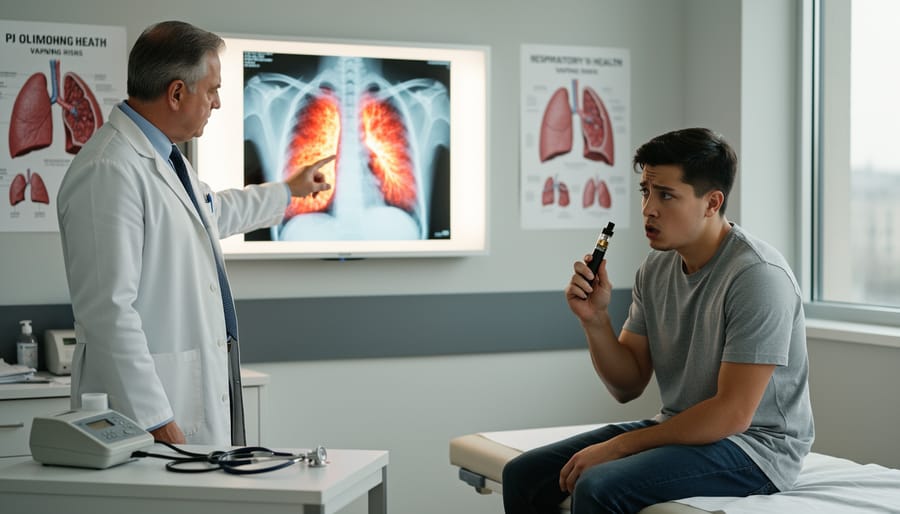
When vaping devices operate at excessive temperatures, typically above 400°F (204°C), decarboxylation can produce harmful combustion byproducts similar to those generated by smoking. These compounds include polycyclic aromatic hydrocarbons (PAHs), benzene, and formaldehyde, which pose respiratory and carcinogenic risks. At the other extreme, temperatures too low for complete decarboxylation leave unconverted THCa and plant material residues that may irritate airways when inhaled repeatedly.
The narrow temperature window for safe, efficient decarboxylation, generally 220-250°F (105-121°C), makes precise device control critical. Fixed-temperature devices or those with malfunctioning heating elements may inadvertently expose users to these hazards. Certain populations face amplified vulnerability: individuals with pre-existing respiratory conditions, those using vaping products heavily, and anyone exposed to pregnancy vaping risks should exercise particular caution.
Regular device maintenance, including cleaning residue buildup that can char and release irritants, reduces exposure to incomplete decarboxylation byproducts. Choosing devices with reliable temperature displays and automatic shutoff features helps maintain the optimal conversion range while minimizing harmful compound formation.
Additives and Carrier Substances
THCa vaping products often contain additives beyond the cannabinoid itself. Propylene glycol (PG) and vegetable glycerin (VG), common ingredients in standard what’s in e-liquid serve as carrier substances that create vapor and help distribute THCa. While generally recognized as safe for ingestion, research on their long-term inhalation effects remains limited, with some users reporting throat irritation or respiratory symptoms.
Cutting agents pose more serious concerns. The 2019-2020 outbreak of e-cigarette or vaping product use-associated lung injury (EVALI) primarily linked to vitamin E acetate added to THC products demonstrated how dangerous undisclosed additives can be. This oil-based cutting agent caused severe lung damage in thousands of cases. Though regulatory responses have reduced vitamin E acetate use, other cutting agents of unknown safety persist in unregulated markets. Flavoring compounds present additional unknowns, while they may taste pleasant, certain flavoring chemicals produce harmful byproducts when heated. Diacetyl, for example, has been associated with serious lung disease when inhaled.
These risks concentrate in unregulated products where ingredient disclosure is inconsistent or absent entirely.
Common Uses and Applications of THCa Vaping
People turn to THCa vaping for diverse reasons spanning medical, recreational, and harm reduction motivations. Understanding these use patterns provides context for the health risk discussion without endorsing or condemning the practice.
Medical users often seek symptom relief for conditions like chronic pain, nausea, anxiety, and sleep disturbances. Vaping appeals to this group because effects begin within minutes, far faster than the 30 to 90 minutes required for edibles to take effect. This rapid onset allows users to titrate their dose more precisely, stopping when adequate relief occurs rather than overshooting with an edible that continues absorbing. Some patients managing acute symptoms, such as breakthrough pain or chemotherapy-induced nausea, particularly value this responsiveness.
Recreational users choose vaping for the psychoactive effects of THC after decarboxylation. The method offers perceived advantages: less odor than smoking, portability, and ease of use in settings where traditional smoking would be conspicuous or prohibited.
Common motivations for choosing THCa vaping include:
- Managing medical symptoms like pain, nausea, or insomnia with rapid, adjustable dosing
- Recreational use for psychoactive effects in a discreet, portable format
- Social contexts where smoking would be impractical or unwelcome
- Harm reduction by former cigarette or cannabis smokers seeking to eliminate combustion
Former smokers sometimes view vaping as harm reduction, believing it eliminates combustion-related toxins while preserving familiar inhalation behaviors. This perception drives adoption among those attempting to reduce exposure to smoke while maintaining cannabis use.
The perceived discretion of vaping, minimal odor, compact devices, vapor that dissipates quickly, makes it attractive for users who want to avoid the social stigma or legal complications of more conspicuous consumption methods. However, discretion should not be confused with safety, as the health risks outlined elsewhere in this article remain relevant regardless of social convenience.
Risk Reduction Strategies for Those Who Choose to Vape THCa
If you choose to vape THCa products, several evidence-based strategies can reduce potential harm. Start with device selection: choose vaporizers from established manufacturers with transparent specifications and temperature controls. Devices that allow precise temperature adjustment, typically between 315-440°F (157-227°C), give you better control over the decarboxylation process and minimize the formation of harmful combustion byproducts. Avoid devices that reach combustion temperatures above 450°F (232°C).
Temperature management matters significantly. Lower temperatures produce less THC conversion but generate fewer potentially harmful compounds. Higher settings increase potency but may create irritating vapors and degradation products. Experiment within the safe range to find what works for your needs. Understanding how to vape properly includes proper inhalation technique, slower, gentler draws rather than aggressive pulls that can overheat the chamber.
Source your products exclusively from licensed, regulated dispensaries where mandatory testing screens for contaminants, pesticides, heavy metals, and residual solvents. Read labels carefully and avoid products containing vitamin E acetate, medium-chain triglycerides, or undisclosed cutting agents. Stick with pure THCa extracts or products with minimal, clearly listed ingredients.
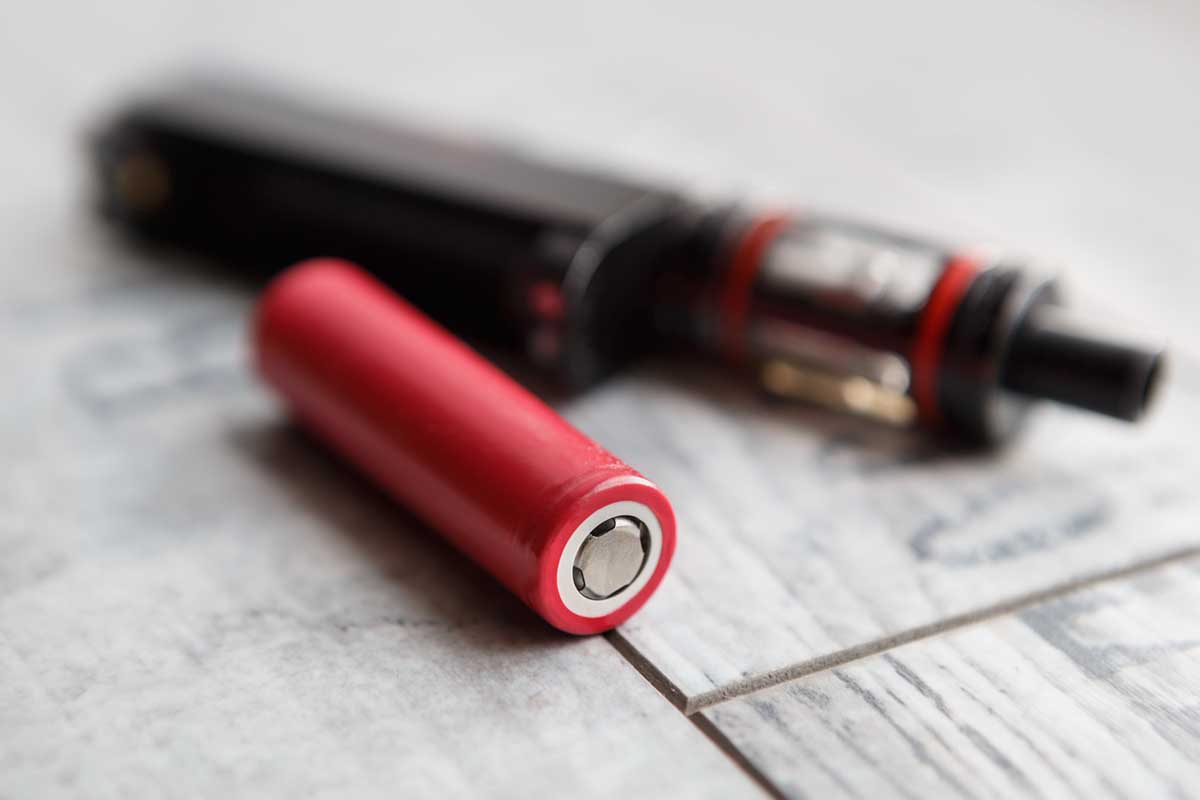
Pay attention to battery safety basics: use only manufacturer-recommended chargers, store devices properly, and replace batteries showing signs of damage. Maintain your device by cleaning it regularly according to manufacturer guidelines, which prevents residue buildup that can decompose into irritants.
Watch for warning signs including persistent cough, chest tightness, shortness of breath, or unusual fatigue. If respiratory symptoms develop, discontinue use immediately and consult a healthcare provider. Keep consumption moderate rather than frequent, as chronic exposure increases risk regardless of precautions taken.
Frequently Asked Questions
At what temperature does THCa convert to THC?
THCa begins converting to THC at around 220°F (105°C), with optimal decarboxylation typically occurring between 220-250°F (105-121°C). Higher temperatures accelerate the conversion but may also produce unwanted combustion byproducts if devices exceed safe vaping ranges.
Is vaping THCa safer than smoking cannabis?
Vaping generally exposes users to fewer combustion byproducts than smoking because it heats material at lower temperatures without burning. However, vaping carries its own risks from additives, carrier substances, and potential device malfunctions, so it’s not risk-free, just different from smoking’s particular hazards.
How can you tell if a THCa vaping product is unsafe?
Warning signs include unusually cheap products, lack of third-party lab testing results, absence of ingredient lists, strange tastes or smells, and purchase from unregulated sources. Products from licensed dispensaries with visible test results showing no harmful additives or contaminants are generally more reliable.
What makes THCa vaping products attractive to young people?
The discreet nature of vaping devices, minimal odor compared to smoking, appealing flavors, and ease of use contribute to youth interest. Marketing that emphasizes novelty or positions products as less harmful than smoking can also increase appeal to younger audiences unfamiliar with nuanced risk comparisons.
These questions reflect the most frequent concerns people have when evaluating THCa vaping. The temperature question matters because users want control over their experience and to avoid creating harmful compounds through excessive heat. Understanding that vaping presents different risks rather than simply fewer risks helps people make realistic assessments. Recognizing unsafe products protects consumers in markets with variable regulation. The youth question acknowledges a legitimate public health concern without resorting to panic, instead identifying specific factors that drive adolescent interest so that parents, educators, and policymakers can address them through targeted prevention efforts rather than blanket prohibitions that often prove ineffective.
Policy Considerations and Collaborative Solutions
The regulatory landscape for THCa vaping products remains inconsistent across jurisdictions, creating gaps in consumer protection and public health oversight. While some regions have implemented comprehensive frameworks governing cannabis products, others lack specific regulations addressing THCa vaporizers and their unique decarboxylation characteristics.
Effective policy requires collaboration among stakeholders with seemingly competing interests. Public health officials bring epidemiological expertise and population-level health priorities. Retailers contribute practical insights about consumer behavior and market realities. Harm reduction advocates ensure policies remain grounded in evidence rather than ideology. When these groups work together, they can develop solutions that protect public health without creating black markets or pushing consumers toward riskier alternatives.
Product testing standards represent a foundational policy element. Independent laboratory analysis should verify THCa content, screen for pesticides and heavy metals, and identify potentially harmful additives before products reach consumers. Standardized testing protocols across jurisdictions would prevent regulatory arbitrage while ensuring consistent safety baselines.
Age verification systems must extend beyond point-of-sale requirements. Online retailers need robust verification mechanisms that prevent youth access without creating unnecessary barriers for adult consumers. Technology-enabled solutions can balance these concerns more effectively than prohibition-focused approaches.
Labeling requirements should provide consumers with essential information: THCa content, suggested temperature ranges for decarboxylation, ingredient lists including all additives, and clear health warnings. Transparency empowers informed decision-making without dictating adult choices.
Education initiatives targeting both consumers and healthcare providers fill critical knowledge gaps. Many physicians remain unfamiliar with vaping technologies and THCa pharmacology, limiting their ability to counsel patients effectively.
Understanding THCa decarboxylation is essential for anyone considering or currently using vaping products containing this compound. The conversion from non-intoxicating THCa to psychoactive THC through heat is a straightforward chemical process, but the health implications of vaping these products remain complex and evolving.
The evidence clearly shows that vaping THCa products carries respiratory risks, particularly when devices operate at excessive temperatures or when products contain harmful additives. While some view vaping as less harmful than smoking, it is not risk-free. The absence of long-term research means we cannot fully assess the cumulative health effects.
Informed decision-making requires access to accurate information, regulated products with transparent labeling, and ongoing scientific investigation. Those who choose to vape should prioritize temperature control, avoid products with unknown additives, and source from regulated markets.
Moving forward, collaborative approaches involving public health officials, researchers, retailers, and harm reduction advocates offer the best path toward protecting public health. Balanced policies that acknowledge both risks and real-world use patterns can reduce harm more effectively than prohibition or unrestricted access.
The conversation around THCa vaping must remain grounded in evidence, free from sensationalism, and focused on practical solutions that prioritize health and safety.